HERO Cameras
Woodman worked on his first camera for two years after founding the company, eventually introducing the GoPro 35mm HERO in September 2004 at San Diego's Action Sports Retailer trade show. In its first year GoPro sold $150,000 worth of products. In 2006 the company introduced its first Digital HERO, with 10 second video capability, and generated $800,000 in revenue. The following year GoPro sales quadrupled to $3.4 million.
In 2014, the company was selling the HERO3+ in editions of different colors. It was capable of filming in 16:9 aspect ratio, supporting 4K UHD video and 12MP still photographs. The HERO4 was introduced on 24 September 2014.
HERO2
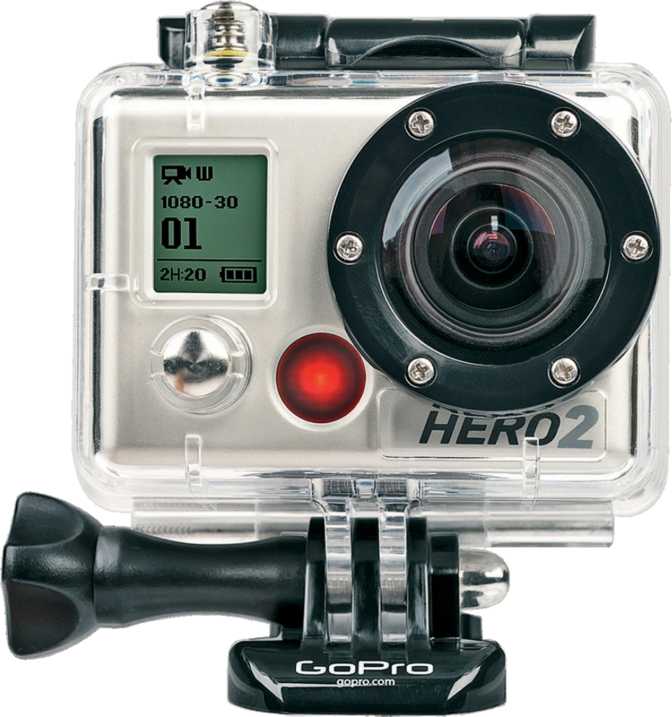
The HERO2 was launched on October 24, 2011. It has an 11 MP image sensor, improved low-light capability and records at up to 120 fps. It was sold with three different accessory packages as the Outdoor, Motorsports, and Surf Editions.
HERO3
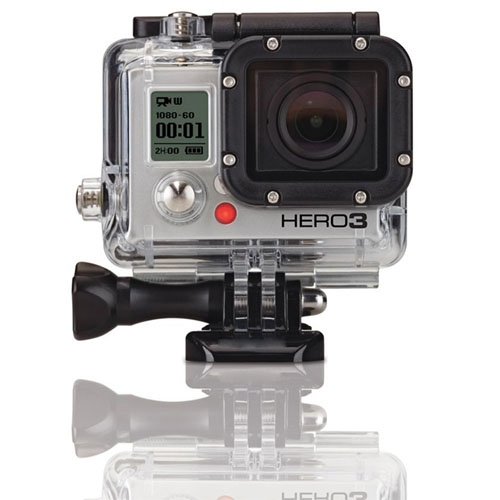
In late 2012, GoPro announced the HERO3 line of cameras. These new cameras came in three editions: black, silver and white.
All three versions of the HERO3 come in a new 30% smaller and 25% lighter package, with WiFi functionality built in. The change of the physical dimensions of the cameras compared to the previous generations (HERO1 and HERO2 were physically identical) means that some of the camera accessories for HD HERO Original and HERO2 are not compatible with HERO3, so GoPro made new versions of those accessories specifically for HERO3 (and mostly for HERO3+, see below). Those new versions of accessories are usually not compatible with older Hero camera generations. However, a lot of other accessories are compatible with all HD Hero camera generations.
The HERO3 Silver and Black cameras have significantly less battery endurance than the HD HERO Original and HERO2. For example, in 720p resolution with 25/30 fps, while HD HERO Original and HERO2 have a stated battery runtime of 3 hours, HERO3 Silver Edition has a stated battery runtime of 2 hours, and HERO3 Black Edition has a stated battery runtime of 1.5 hours (the Black Edition's "most economical" setting is 1080p/30 fps, so this also partially contributes to its poor battery runtime).
The Black Edition has a new 12 MP sensor that can capture 4K UHD digital video at 15 fps, 2.7K video at 30 fps, 1440p at 48 fps, 1080p at 60 fps, 960p at 100 fps, 720p at 120 fps and WVGA at 240 fps. The Black edition also includes the WiFi Remote. The Black Edition cannot record at 25/30 fps in 720p and WVGA resolutions; it can only record at very fast frame rates in those resolutions. This is a deliberate firmware limitation, as the manufacturer does not expect that this high-end camera model will be used at these lower resolutions and frame rates.
The Silver Edition uses the same 11 MP sensor as the HERO2, and the White edition uses the same 5 MP sensor as the HD HERO Original.
HERO3+
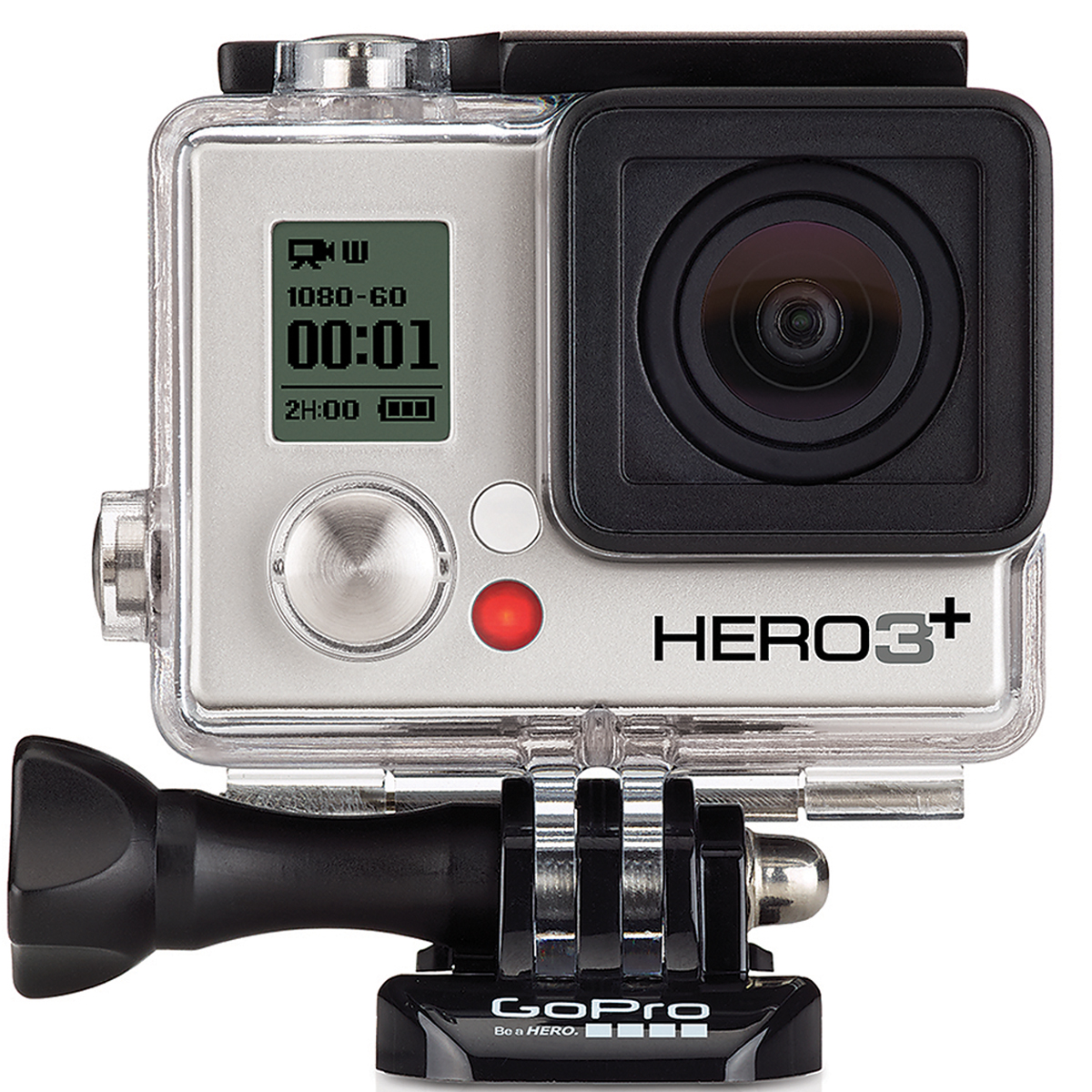
In October 2013, GoPro released the HERO3+, available in Black and Silver Editions, replacing the HERO3 generation. The HERO3 White Edition remains as GoPro's low-end device.
The HERO3+ camera models claim dramatically improved low light performance and have a waterproof enclosure which is 20% lighter and 15% smaller than the HERO3's, according to the GoPro website. The HERO3+ camera housing is 20% smaller than the HERO3. The cameras are claimed to have improved image sharpness (close focus down to 7" vs about 3 ft on the HERO3, at the expense of distant focus which is slightly less sharp with HERO3+), and better audio functionality with wind noise reduction. Battery life is claimed to be 30% longer than for the HERO3 model (both through better efficiency and a higher-capacity battery of the same dimensions).
The Black Edition has video modes of 1440p48, 1080p60, 960p100 and 720p120 as well as 4K15 and 2.7K30 and can shoot 12MP stills at up to 30 fps. Along with the increased resolution, the HERO3+ Black Edition also offers an optional function in firmware (called "SuperView") which increases the field of view. It has additional functions, including dynamic low light situation adjustment, higher-quality recording modes (higher bitrates, no white balance applied, etc.) etc. The Black Edition continues to include a Wifi Remote. It does not have the ability to record 25/30 fps in 720p and WVGA modes (it can only record at very fast frame rates in those lower resolutions). This is an intentional firmware limitation, as the manufacturer does not expect a camera with its capabilities to be used at low resolution and frame rate. The battery runtime of HERO3+ Black Edition is significantly longer than HERO3 Black Edition but 30–50% lower than the battery runtime of the older HERO2 and HERO1.
The Silver Edition has video modes of 1080p60 and 720p120 and can shoot 10MP stills at up to 10 fps. In contrast to the Black Edition, the Silver Edition can record at 25/30 fps (or higher) in all supported resolutions. HERO3+ Silver Edition also has about 25%-50% longer battery runtime during recording than HERO3+ Black Edition (they both use the same batteries). The difference in runtime depends on the resolution/fps combination, and whether WiFi and GoPro mobile application are used during recording. The difference in runtime increases as the fps is lowered and the additional functions are deactivated on both cameras. The battery runtime of HERO3+ Silver Edition is similar to the battery runtime of HERO2 and HERO1.
The HERO3 HD camera was awarded the 2013 Technology & Engineering Emmy Award for its contribution to television.
HERO4
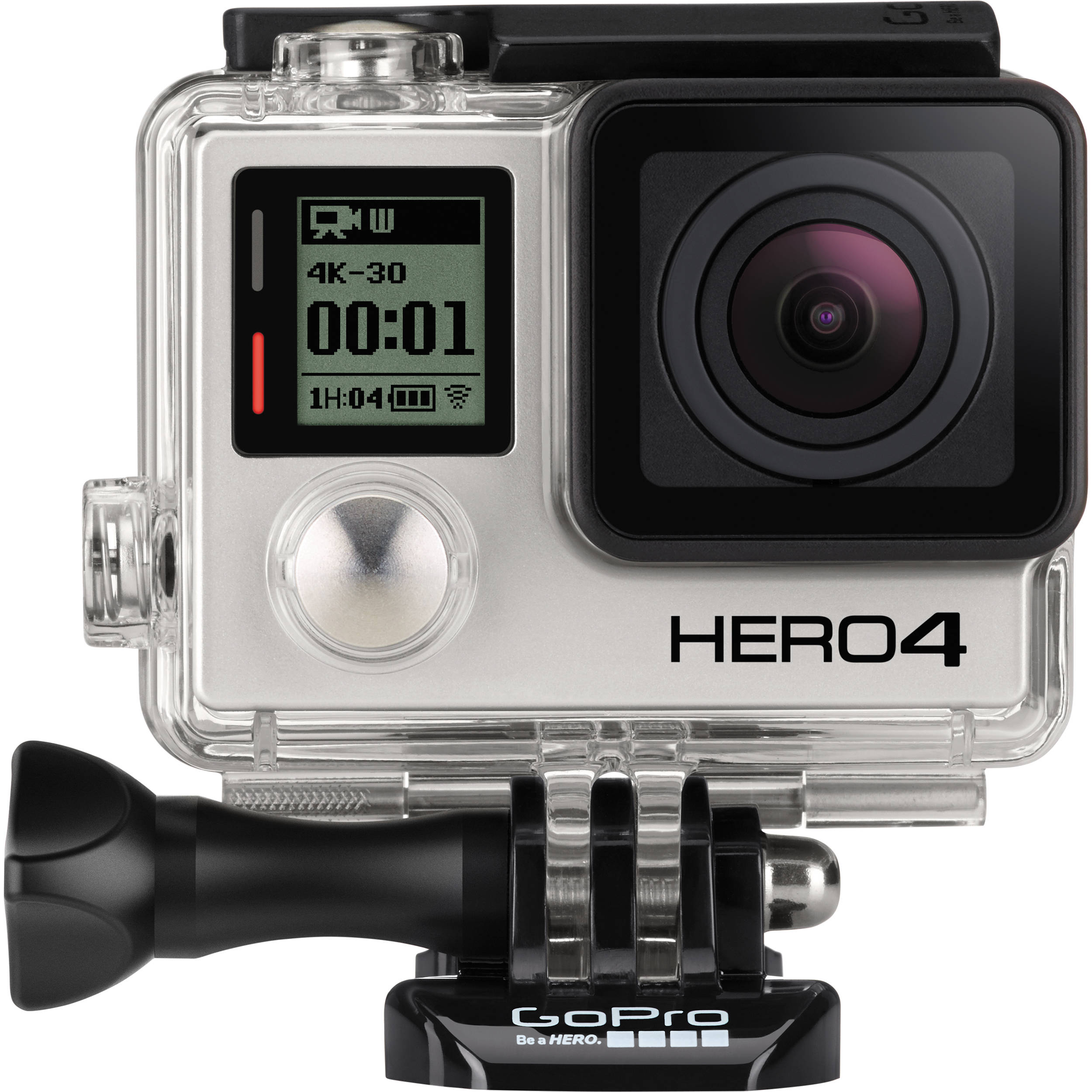
In September 2014, GoPro announced the HERO4, available in Black Edition and Silver Edition, which replace their respective HERO3+ generation predecessors. The HERO Session, a budget camera, was also announced.
The HERO4 Black Edition still has a 12 mp CMOS and a f/2.8 fixed maximum aperture and focus free. It adds Bluetooth connectivity, Highlight tag, Protune Available for photo and a new processor claimed by GoPro to be twice as fast as that of the HERO3+ Black Edition, doubling the frame rates in most resolutions. The HERO4 Black Edition can record 4K UHD video (3840×2160) at a frame rate of 24, 25 and 30 fps. In Superview mode, 4k is only possible at 25 fps. Many other rates and resolutions are available. The HERO4 Black Edition still shoots stills at a maximum of 12MP with a maximum burst rate of 30 fps. With Wi-Fi disabled at 4k/30, GoPro claims the HERO4 Black Edition battery life to be 65 minutes, increasing to a maximum of 1h 50' at 720p/240. The HERO4 Black battery is in a different form factor than its predecessors. Initial side-by-side comparisons of HERO3+ and HERO4 Black edition video results suggest that the newer model has more detail at long range and similar performance at close range.
The HERO4 Silver Edition is basically a HERO3 Black Edition with the addition of a micro speaker, built-in touch screen display, Protune for photo and highlight tag the first GoPro with this, a lower clocked Cortex-A9 and missing the Black Editions integrated analog-to-digital converter which supports a wider variety of professional low-sensitivity external mics. The video modes supported by the HERO4 Silver Edition are similar to those of the HERO3+ Black, due to the higher processing speed and thermal requirements of 4K video (3840×2160), but it supports Wi-Fi, Bluetooth and contains the same, Ambarella Inc. A9 SoC as in the HERO4 Black.
The HERO Session, released July 6, 2015, is 50% smaller and 40% lighter comparing to other versions of the GoPro HERO4 camera.
The HERO4 models maintain the H.264 video codec of previous versions and MP4 file formats. GoPro claims the mono microphone in both the Black and Silver Editions has twice the dynamic range of the HERO3+, and that the HERO4 Black and Silver Editions have improved low-light performance.
HERO+LCD
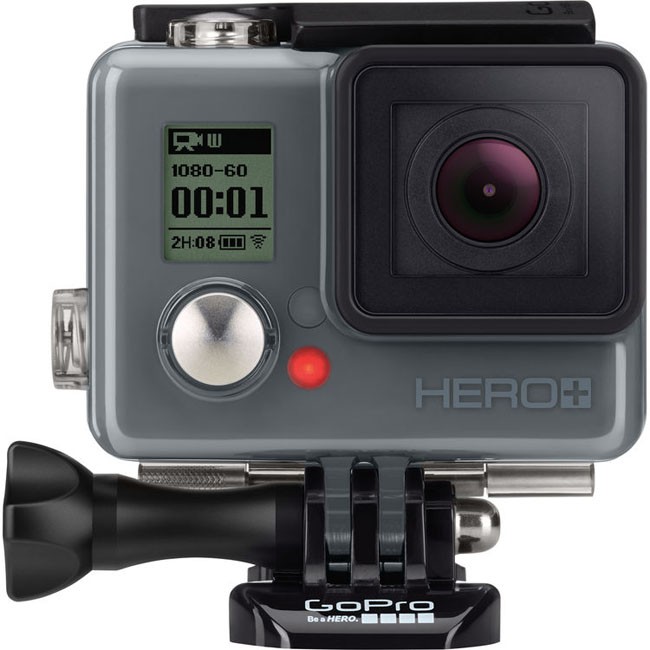
In June 2015, the company started to sell a new camera: GoPro HERO+LCD, which provides video recording at 1080p at 60 fps/and 8 megapixel photos. GoPro HERO+LCD has a touch screen to preview the shot to frame the scene perfectly and letting user easily navigate the menu. New feature in the camera -Instant camera editing. GoPro HERO+LCD is waterproof, because it is built directly into a waterproof case (waterproof to 131 feet (40 m)). The device also includes a feature HiLight Tagging and built-in video editing function, which allows user to put a label on the main points while shooting video or in the process of view, which makes it possible to quickly find desired footage later. Technical specifications: video resolution 1080p 60 FPS / 720p 60 FPS, photo resolution 8 MP / 5 FPS burst, built-in Wi-Fi and Bluetooth, user-friendly modes like QuikCapture, SuperView and Auto Low Light, waterproof to 131’ (40 m), built-in touch display.
HERO+
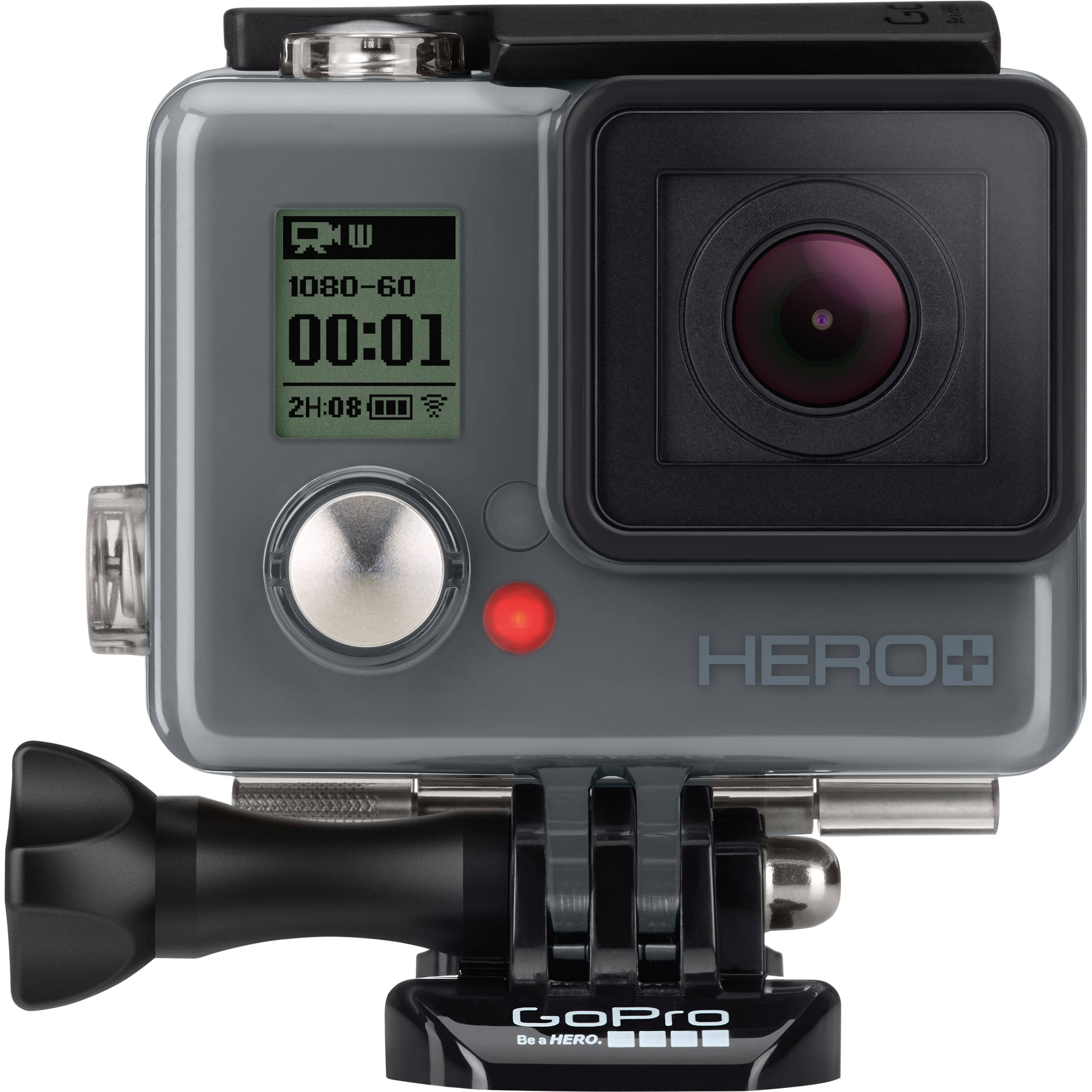
In October 2015, GoPro released its third entry level camera: GoPro HERO+. This camera has everything similar to the previous HERO+LCD like the 1080p 60 fps / 720p 60fps Video Resolution, 8 MP / 5 FPS burst photo resolution, built-in Wi-Fi and Bluetooth, waterproof up to 40 m and other modes like Superview, Auto Low Light, QuikCapture and Timelapse mode which automatically captures photos at set time intervals from 0.5 to 60 seconds. However, it does not have an LCD built-in touch display and it is slightly lighter than HERO+LCD. The HERO+ weighs at 123 g whereas the HERO+LCD weighs 127 g. The housing also remained the same. This camera is priced at USD $199.99.
HERO5
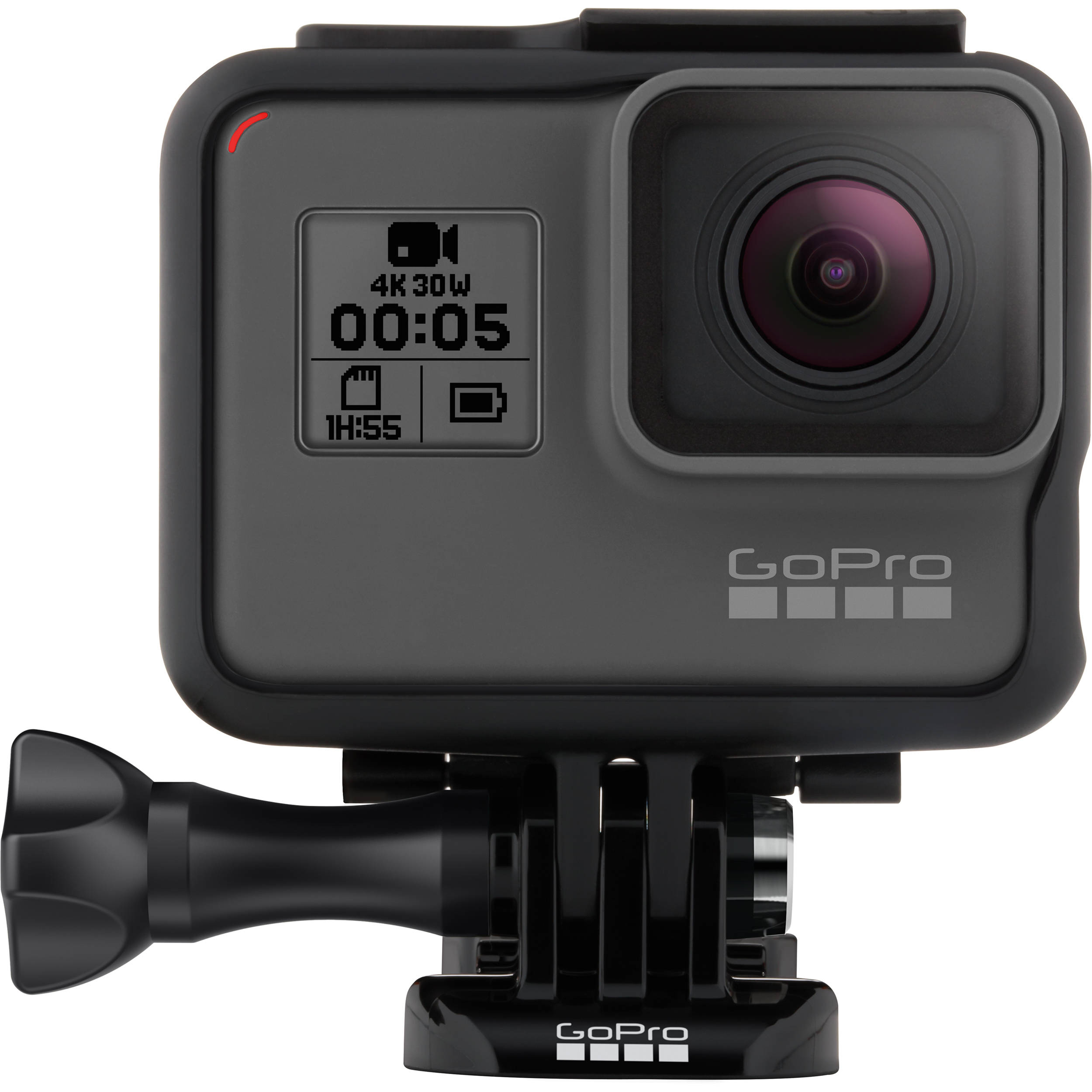
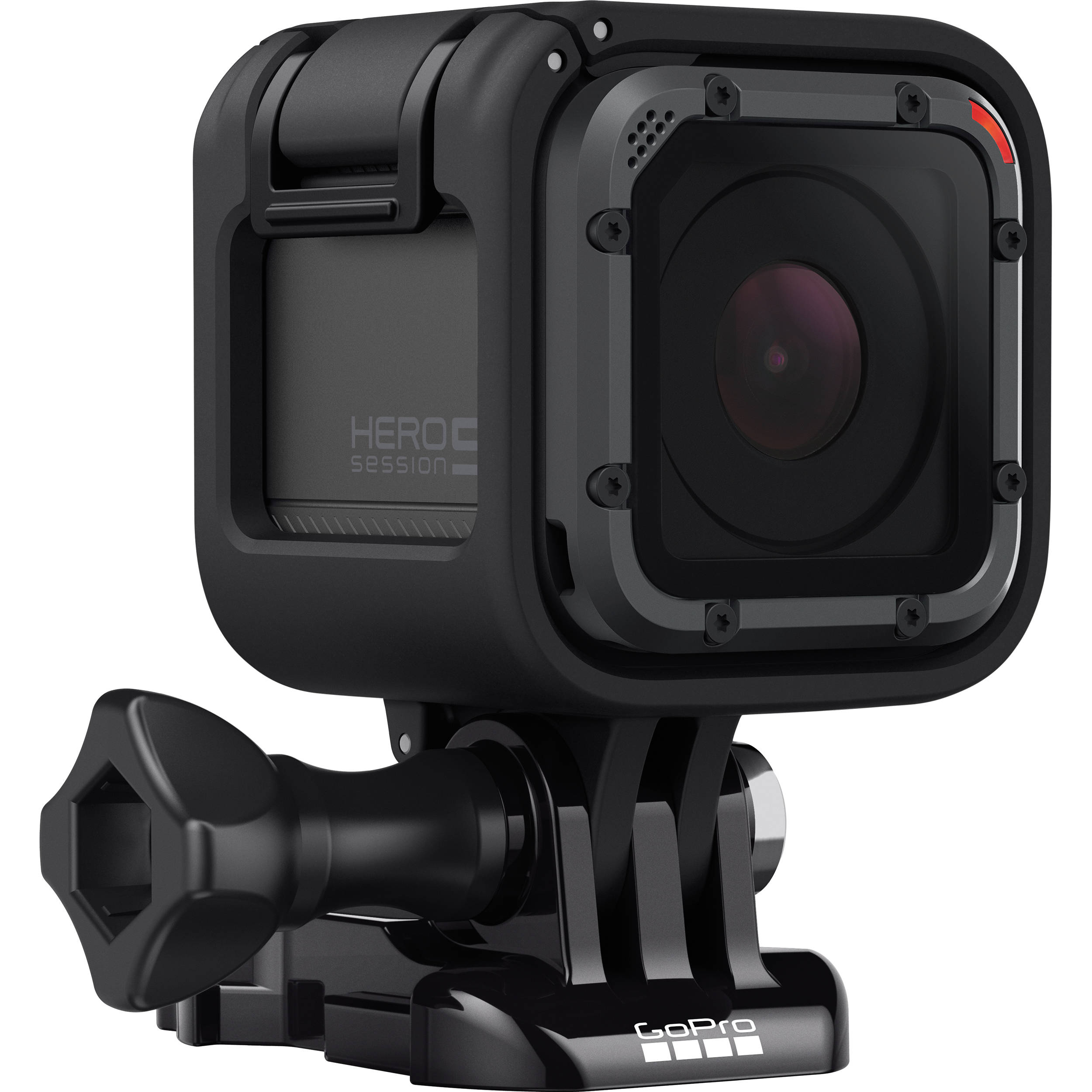
HERO5 Black and HERO5 Session were introduced in September 2016. In contrast to previous models, they are waterproof up to 10 m, support 4k video recording up to 30 fps, automatic upload of footage to cloud and voice controls.